Radon Levels in Utah
The average Utah home already exceeds the EPA’s radon action level. With a state average of 5.3 pCi/L, Utah ranks among the highest-risk states in the country — yet most homeowners have never tested.
Radon is invisible, odorless, and builds up silently inside homes across Salt Lake City, Davis County, Utah County, and communities statewide. Understanding what your test results mean and when to take action could be one of the most important things you do for your family’s health.
Contact us today.
| How Radon Is Measured |
| EPA vs. WHO Radon Action Levels |
| Why Utah Is at Higher Risk |
| Geology of the Wasatch Front |
| High Elevation |
| Cold Climate and Tight Insulation |
| New Construction Is Not Exempt |
| Radon Levels by County in Utah |
| How Radon Levels Change Over Time |
| Season |
| Weather |
| Foundation Type |
| Home Pressurization |
| What the Research Says About Radon in Utah |
| EPA National Residential Radon Survey |
| Utah Department of Environmental Quality |
| National Cancer Institute |
| Health Physics Society |
| How to Test Your Utah Home for Radon |
| Short-Term Test Kit |
| Professional Continuous Reading Monitor |
| Best Time to Test |
| What to Do If Your Radon Level Is High |
| Find Out Your Home's Radon Level Today |
| Your questions, answered |
| Keep your family safe from radon |
| FREE RADON MITIGATION QUOTE |
Over 1 in 3 Homes in Utah Has a Radon Problem
Radon is colorless, odorless, and completely undetectable without a test. It seeps silently through foundation cracks and builds up indoors over time. Utah’s state average of 5.3 pCi/L is already above the EPA action level of 4.0 pCi/L, and roughly 1 in 3 Utah homes test above that threshold. New data from Alpha Energy Laboratories shows that 48.3% of Utah homes tested between 2015 and 2025 had radon levels high enough to warrant a mitigation system. Many Utah families live with elevated levels for years without knowing it, since exposure occurs primarily indoors. Installing a mitigation system is the most effective way to protect your household from this long-term health risk. https://www.ksl.com/article/51442129/utah-families-face-a-growing-radon-risk
Long-term exposure is the second leading cause of lung cancer in the United States and the leading cause in non-smokers. The only way to know if your family is at risk is to test.
How Radon Is Measured
Radon levels are measured in picocuries per liter of air, written as pCi/L. A picocurie is a unit of radioactivity. The higher the number, the greater the concentration of radon decay products in the air inside your home.
The EPA and the World Health Organization both publish action thresholds based on this measurement. Understanding both helps you make a well-informed decision about your home.
EPA vs. WHO Radon Action Levels
Both agencies agree that no level of radon exposure is completely safe. Their thresholds reflect what is achievable through mitigation in most homes. If your home is testing at a level of 4 or higher you should heavily consider a radon mitigation system. If you test is between levels 2-4, it is highly recommended.
Outdoor average: 0.4 pCi/L
The EPA estimates the national outdoor average is approximately 0.4 pCi/L. The goal of mitigation is to bring indoor levels as close as realistically possible to outdoor levels.
Why Utah Is at Higher Risk
Utah’s elevated radon problem is not caused by a single factor. It is the result of geology, elevation, climate, and building practices compounding each other.
Geology of the Wasatch Front
The soils and rock formations along the Wasatch Front contain naturally elevated concentrations of uranium and radium, the parent materials that decay into radon gas. As radon migrates upward from these deposits, it enters homes through foundation cracks, utility penetrations, and soil contact points.
Cold Climate and Tight Insulation
Cold temperatures force homes to run the furnace circulating more warm air, causing what is known as a "Stack Effect" (warm air gets pushed upward out of the home as cold air is pulled in around the foundation where radon gas collects). The result of this stack effect is drawing in more air (thus more radon gas) from small cracks and openings in the foundation into the basement and the rest of the home.
As the temperatures drop and cold air settles outside of your home, it actually increases the natural draw your home puts on the soil as the warm air is pushed up increasing the potential deadly radon gas into the home through what is called vacuum pressure.
Fun Fact
Often we may feel that newer homes with energy efficient windows, better insulated walls, better attic insulation etc. prevent radon form entering the home. This is not the case – the stack effect and air pressure differences created from the home draws in more radon gas – sometimes even more than older homes.
Radon gas is present in all homes regardless of age, quality, and dwelling size, the question is how much. Hundreds of tests have proven that radon concentrations increase in the winter months largely due to the facts stated above. With the increased radon levels in homes, our families are put in additional danger due to spending more time indoors and less time outdoors; windows are shut, and more time is spent in the basement.

| Zone 1 — Highest Potential (above 4.0 pCi/L) | Zone 2 — Moderate Potential (2.0 to 4.0 pCi/L) |
|---|---|
| Carbon County | Beaver County |
| Duchesne County | Box Elder County |
| Grand County | Cache County |
| Piute County | Daggett County |
| Sanpete County | Davis County |
| Sevier County | Emery County |
| Uintah County | Iron County |
| Juab County | |
| Kane County | |
| Millard County | |
| Morgan County | |
| Salt Lake County | |
| San Juan County | |
| Summit County | |
| Tooele County | |
| Utah County | |
| Wasatch County | |
| Washington County | |
| Wayne County | |
| Weber County |
Important note: Zone classifications reflect predicted averages across large areas, not individual home measurements. The only way to know your actual radon level is to test your specific home.
How to Test Your Utah Home for Radon
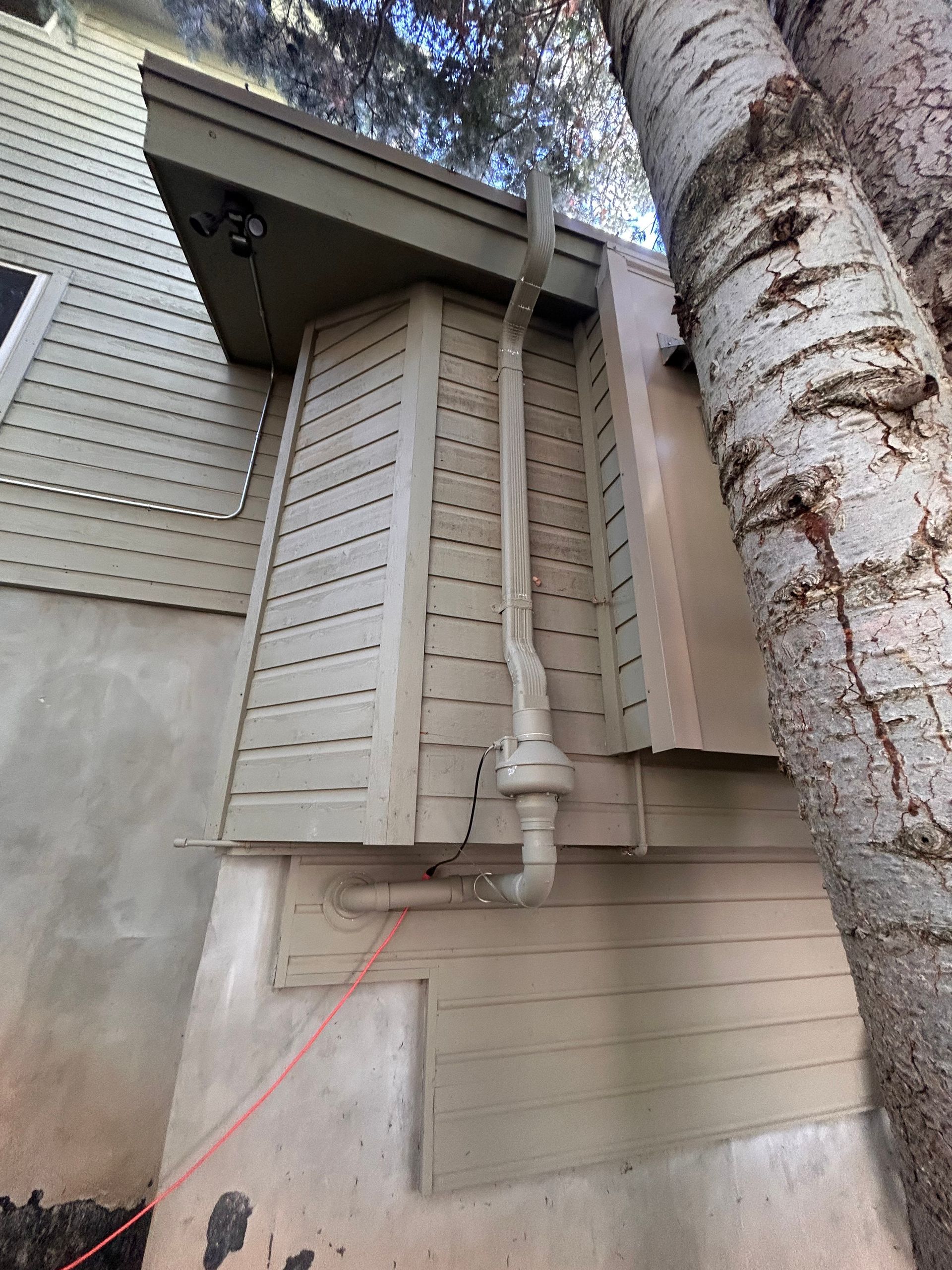
Given Utah’s risk profile, testing should be a priority for every homeowner. There are two primary methods available.
Short-Term Test Kit
- A charcoal kit or a Continuous Radon Monitor (CRM) should be placed in the lowest livable level of your home for 48 hrs.
- The charcoal kit is mailed to a certified laboratory, and results are returned within a few business days. The CRM is celebrated regularly by a 3rd Party and results can be sent after the 48 hr test via email, often used in real estate transactions where the radon report is needed sooner than one week.
Professional Continuous Reading Monitor
An electronic device, placed by a certified technician, that records radon levels hourly for 48 hours. This method accounts for daily fluctuations and is required for real estate transactions. Radon Be Gone uses professional-grade monitors for all testing appointments.
Best Time to Test for Radon
- Radon is a year-round risk. Even if levels are usually higher in winter because of the stack effect, radon can still be elevated in other seasons. Exposure adds up over time, so the sooner you know your levels, the better.
- Earlier action protects you sooner. If your home has high radon, mitigation (installing a system) takes time to schedule and complete. Waiting until winter means you continue breathing elevated levels longer than necessary.
- A high result outside winter is a clear warning: If a test shows elevated radon in spring, summer, or fall, levels will almost certainly be higher in winter. That gives you an early signal to fix the problem before the colder months arrive.
- Testing is simple any time of year. There is no technical reason to delay.
Test as soon as possible. If levels are high, fix it promptly. Waiting for winter only delays protection.
What to Do If Your Radon Level Is High
- A high test result is not a reason to panic. Radon mitigation is a proven process with a very high success rate. In most Utah homes, a properly installed system reduces radon levels by 90% or more within days of activation.
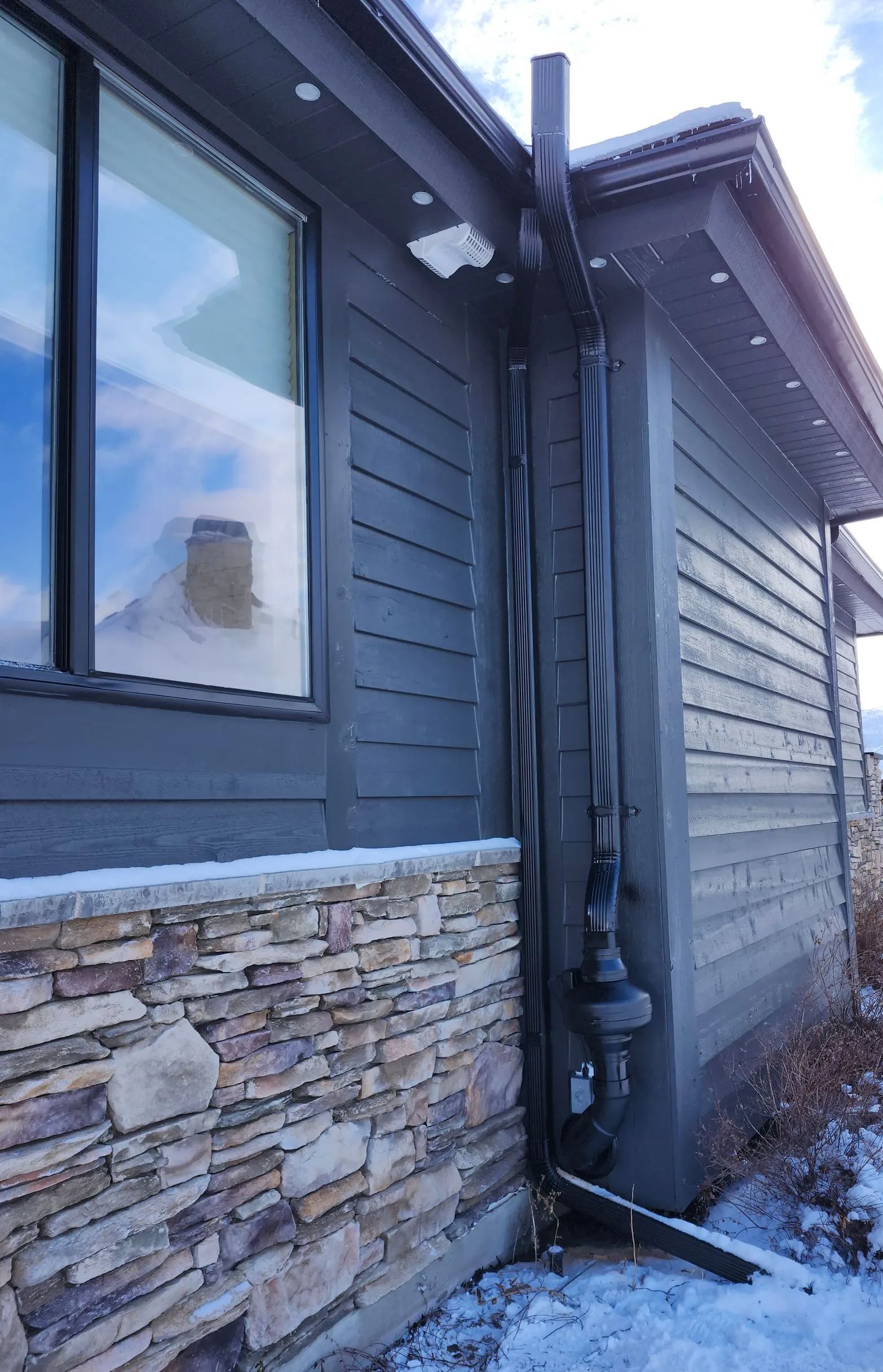
- The most common method is a sub-slab depressurization system, which draws radon from beneath the foundation through a pipe and fan system and vents it safely outside. Most installations are completed in a single day.
- Radon Be Gone’s NRPP and AARST certified technicians have installed over 25,000 systems across Utah since 2008.
Find Out Your Home's Radon Level Today
Utah’s geology, elevation, and climate create conditions that put a large share of homes at risk. The only way to know where your home stands is to test. If results come back high, mitigation is fast, affordable, and backed by a lifetime guarantee.
Radon Be Gone has protected over 25,000 Utah homes since 2008. Our certified team serves Salt Lake City and communities throughout Utah. Contact us today.